
What Is MCP (Model Context Protocol)? A Practical Enterprise Guide
14 Jan
What happens when your enterprise apps can no longer keep up with customer demands, rising data volumes, or rapid innovation cycles?
You are not alone, over 70% of global enterprises struggle with legacy system limitations that slow down growth, innovation, and interoperability.
This is exactly where cloud-first modernization and AI software development step in, redefining scalability for the digital era.
Today, organizations are looking for more than just technology upgrades, they need business-centric transformation, faster development cycles and intelligent systems that adapt in real time.
As enterprises move from outdated architectures to cloud-native development, they gain the freedom to scale, innovate and optimize performance like never before.
Modern enterprises operate in an environment of fluctuating workloads, unpredictable market swings and rising customer expectations. Traditional IT infrastructures simply weren’t built for this level of dynamism.
Scalability is not just about handling high traffic, it is about:
A rigid system stalls innovation but cloud transformation ensures that organizations scale seamlessly while reducing operational overhead.
Pairing this with AI software development turns your ecosystem into a smart, self-optimizing engine.
A cloud-first modernization roadmap empowers enterprises to adopt cloud technologies as the default choice whenever upgrading, building, or integrating applications.
Instead of force-fitting cloud into legacy frameworks, this approach rebuilds architectures to operate natively in flexible cloud environments.
Cloud platforms offer auto-scaling, ensuring applications expand or contract based on real-time demand.
This eliminates the challenges of manual provisioning and capacity forecasting.
With enterprise cloud adoption accelerating worldwide, companies now benefit from cost efficiency, improved uptime, and measurable performance improvements.
Using microservices, containerization, and serverless computing, organizations build applications that respond quickly to change.
Cloud-native development also supports continuous integration and continuous delivery (CI/CD), reducing deployment times from weeks to hours.
Modern cloud ecosystems embed encryption, identity management, monitoring tools, and compliance frameworks. Enterprises benefit from built-in resilience and automated threat detection capabilities powered by AI.
Pay-as-you-go models reduce capital expenditures while offering granular control. Businesses invest only in the resources they actually use.
This is where cloud transformation becomes more than just a migration, it becomes a strategic enabler for long-term agility.
While cloud-first frameworks provide the foundation, AI software development adds the intelligence needed to automate, optimize and enhance scalability across every layer of your architecture.
AI enables automated monitoring, predictive insights, and self-healing systems. For example:
As a result, enterprises reduce downtime, improve performance, and eliminate manual overhead.
With AI models and analytics pipelines hosted in the cloud, organizations can analyze vast datasets instantly.
This empowers teams to make informed decisions based on accurate, real-time insights.
Modern users expect personalized experiences.
By integrating artificial intelligence development into applications, enterprises deliver:
This creates a superior user experience and a significant competitive advantage.
AI-driven development tools automate code generation, testing, error detection, and deployment processes.
Combined with cloud-native development, teams experience shorter release cycles and greater efficiency.
Adopting a cloud-first strategy is more than a technological shift, it is an organizational mindset. Enterprises choose this approach because it aligns directly with growth goals, cost efficiency, and competitive positioning.
Legacy systems degrade performance and restrict innovation. A cloud-first approach ensures your business stays adaptable as market demands evolve.
Applications scale effortlessly without requiring system overhauls or downtime.
Most AI tools, analytics engines, and modern frameworks are built for cloud ecosystems. This seamless integration between cloud transformation and AI software development accelerates digital innovation.
Cloud-first enterprises enjoy real-time backups, automated failover, and distributed infrastructure—ensuring uninterrupted service delivery.
Modernization is incomplete without rethinking how applications are built. Modern application development focuses on:
This agile, modular approach aligns perfectly with both enterprise cloud adoption and artificial intelligence development, making applications flexible, scalable and secure.
Smaller modules allow teams to upgrade and deploy independently.
Failures in one service don’t affect the entire system.
AI models, APIs, and analytics engines can be updated in isolated environments.
To truly redefine scalability, organizations must unify AI software development and cloud-first modernization into a cohesive ecosystem.
This combination delivers enterprise-ready efficiency, resilience, and innovation.
AI-driven diagnostics, cloud-based medical records, and remote monitoring systems depend heavily on scalable platforms.
Real-time fraud detection, automated trading, and digital banking thrive through cloud transformation and AI.
Predictive maintenance and smart automation reduce downtime and improve quality.
Scalable platforms support seasonal spikes, recommendation engines, and personalization services.
AI-powered forecasting and cloud-native systems streamline operations and reduce delays.
While benefits are tremendous, enterprises often confront obstacles:
A trusted partner like Infomaze, with deep expertise in cloud-first modernization, modern application development, and artificial intelligence development, ensures smooth transitions, robust architectures, and long-term digital success.
We help enterprises achieve scalable, intelligent, and future-ready ecosystems by integrating AI with cloud-first frameworks. Our services ensure:
We build systems that grow with your business, not against it.
Scalability is no longer optional, it is the foundation of digital success.
By combining cloud-first modernization with AI software development, enterprises unlock agility, automation, innovation, and cost efficiency.
Organizations that adopt a strong cloud-first strategy and embrace modern application development are already leading their industries. As AI matures and cloud capabilities expand, enterprises that invest today will secure a tremendous competitive advantage tomorrow.


Disclaimer: All rights belong to the owner. No Copyright or Trademark Infringement Intended.
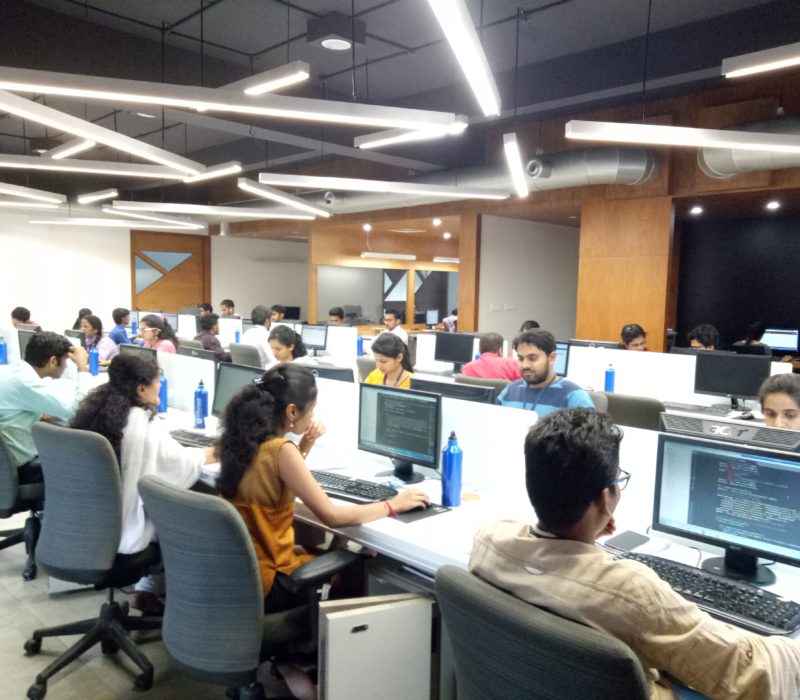
Ultra New, Uber-Cool Workspace with Informal Areas New environment, more creative ideas! Infomaze’s new ...

Having started its growth in a developing country like India, Infomaze has had many options to settle in. It ...
In the era where technology is ruling this world, digitization and automation are in full swing in the field ...
Just like updating ourselves over time, updating your business software is also equally important. In ...

If you are still using the file manager versions 6.0 – 6.8 on WordPress, you need to upgrade immediately, ...